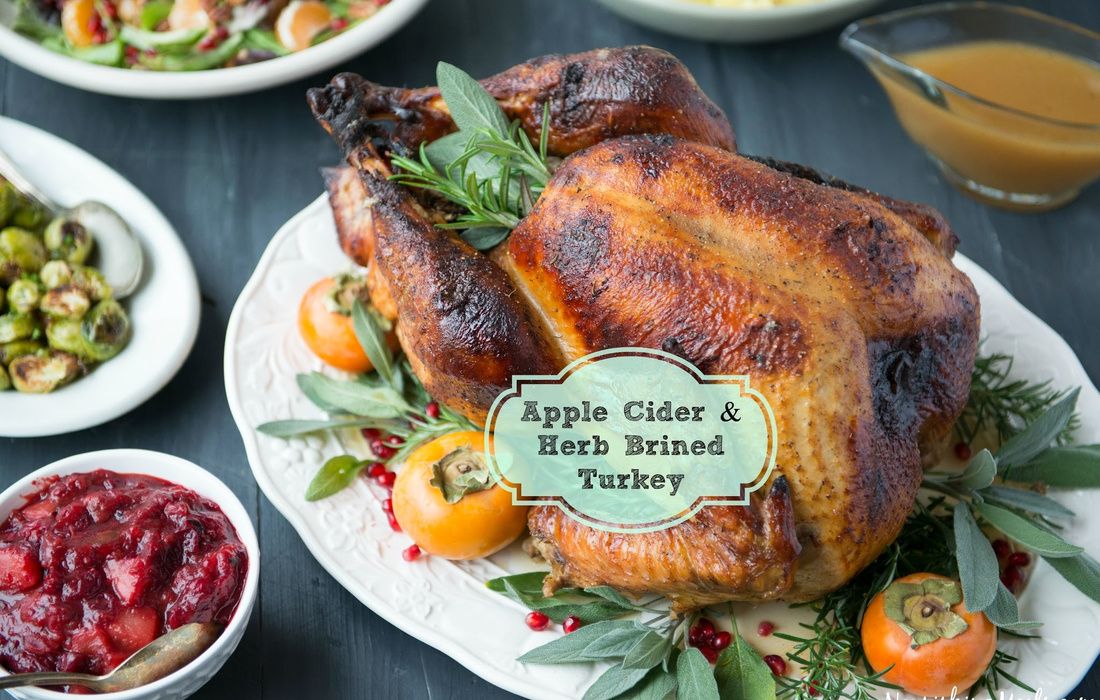
To brine or not to brine...that is the question. I have found that brining a turkey produces very flavorful, juicy, and tender meat. In this post, I'm going to show you how to brine a whole turkey. Brining is the process of soaking the bird in a salt solution. Water from the brine is absorbed into the meat thereby increasing juiciness of the final roasted bird. I like to add flavoring agents as well such as sliced onions, garlic, oranges, and fresh herbs. A flavorful brined turkey will certainly impress your Thanksgiving guests!
I prefer to purchase turkeys from one of my favorite local organic permaculture farms. They are humanely raised and slaughtered right there on the farm. In our town there are a number of farms who raise organic turkeys and sell directly to the consumer. Sometimes you can ask your local Farmer's Market or health food store for the names and numbers of these farms. Often times you need to pre-order, though sometimes they have extra turkeys that they need to sell. Buying direct from a local, organic farmer is by far the healthiest and most sustainable way to enjoy a Thanksgiving turkey!
So now onto the actual process of brining a turkey! There are a few really important things to consider before embarking on this project. First, you will need a very large pot or container to hold the bird, brine, and flavoring agents. I use a 42-quart stainless steel pot. Some people use small coolers (this would work well if you can keep the temperature below 40 degrees, such as in a cold storage room or cold garage). Others use plastic bags. I prefer not to brine in plastic for various reasons, but if you do then you need to make sure you are using food-grade plastic, not plastic garbage bags. Second, you will need a space in your refrigerator to store the pot or container during brining. We have an extra refrigerator in our garage that I use. So as long as you have the right container and the space, then go ahead and try this recipe.
Recipe from the Meal Planner
Apple Cider and Herb Brined Turkey
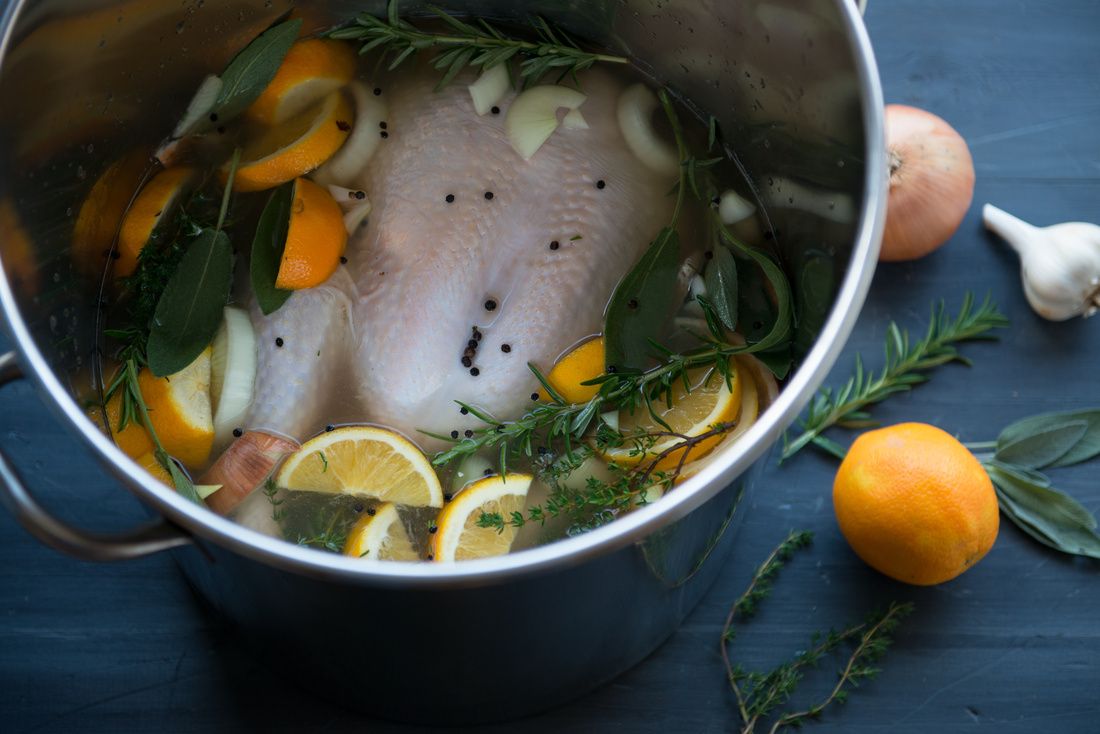
Brining is a wonderful way to create deeply flavored meat. You'll need an extra refrigerator with enough space to be able to make this recipe, or live in a cold climate where the temperature in your garage is below 40 degrees F the entire time the turkey is left out to brine in the pot. Pictured here is a 15-pound turkey. The larger the turkey, the longer it will need to soak in the brine. I add all of the ingredients to a very large stainless steel pot, except for the water, then add the turkey and add water to cover. It will be about a gallon, give or take some, depending on the size of your turkey. If you add more than a gallon of water (say for a larger turkey), you will want to add ¼ to ½ cup more salt, otherwise the brine may not be strong enough. Follow my roasting times below that match the weight of your turkey.
- Place the apple cider, salt, onions, oranges, garlic, rosemary, sage, bay leaves, and black peppercorns into a large pot or container, stir well, and then place the turkey into it. Cover with filtered water. Place a weight on top of the bird to keep it submerged in the brine (like a glass bowl with a rock or a bag of water in it). If you don't use a weight you will need to flip the turkey once or twice during a 24 hour period. Cover and refrigerate for 24 to 72 hours.
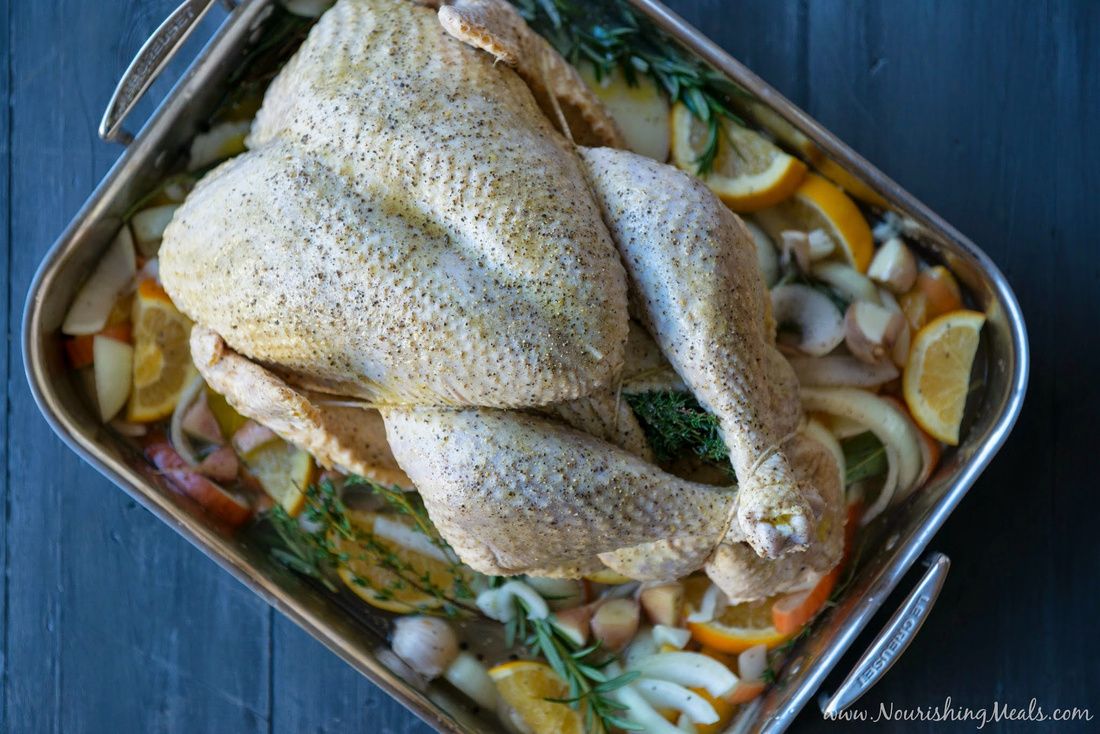
- When ready to cook, preheat oven to 425 degrees F. Pull the turkey out of the brine and place into a roasting pan. Pull some of the onions, herbs, and orange slices out and stuff them into the cavity of the turkey. At this point I like to truss the bird with cotton butcher's twine (you should be able to find this at your local kitchen or grocery store). It is not necessary to truss. You can simple tie the legs together and be done!
- Next, remove the remaining solids from the brine and place them around the turkey in the bottom of the pan. This will flavor the bird even more during cooking and create an amazing gravy! Take about 3 to 4 cups of brine, along with about 2 to 3 cups of filtered water, and add it to the bottom of the pan.
- Season the top of the bird with freshly ground black pepper. Then drizzle the top with extra virgin olive oil.
- Place in the preheated oven for about 25 minutes. Then reduce heat to 325 degrees F and continue roasting until juices run clear. I like to baste the turkey a few times during cooking as well. Follow the cooking times guidelines in the Tip above to determine how long you need to cook your turkey based on weight. Use a meat thermometer if needed to test for doneness. It should read about 160 to 165 degrees F when inserted into the thickest part of the breast, or 170 degrees F when inserted into the thickest part of the thigh.
- Once the turkey is done, let it rest in the pan for about 30 minutes before carving. This allows for the juices to go back into the meat. You can then remove the turkey and place it on a large cutting board to carve.
- Pour the pan juices through a fine-mesh strainer into a 2-quart saucepan. Add water and make a gluten-free gravy if desired.
- Once you have pulled all of the meat from the bones, use the carcass to make a rich, nourishing turkey stock.
Add this recipe to your meal plan
Create your diet profile to filter recipes for your dietary needs. Save this recipe to your collection, add it to your calendar, and combine its ingredients with your other planned meals in one organized shopping list.
 More about Alissa
18 Comments
Read commentsIn reply to Hello, I’m wondering what… by Michelle (visitor)
Hi Michelle,
1 GALLON. It looks like there was an editing mistake when we transferred this recipe over to the new site. Thanks for catching that! :)
In reply to Hi Michelle,
1 GALLON. It… by Ali Segersten (author)
Thank you, looking forward to trying it!
Yes of course you can leave out the garlic. It's just in there for flavoring. You can add or subtract flavorings as needed. Enjoy! :)
I would like to try this but my dad believes he is allergic to garlic (respitory reaction). Do think it would taste ok without?
I did not know that. I am referring to organic unfiltered apple juice or fresh pressed apple cider here…NOT hard cider. Thanks for posting your question here. Hope nobody makes that mistake. :)
I wanted to make this turkey for Christmas, but I live in Vancouver, Canada and it seems like that the term Apple Cider refers to alcoholized cider over here and I can't find non alcoholic version in stores... Am I correct in assuming that Apple Cider in the recipe is unfiltered apple juce? Or can I substitute it with unfiltered apple juce?
Thanks, Regina
Thanks Janice for the feedback! :)
I followed this recipe for my Thanksgiving turkey and it was absolutely delicious, the best I've ever had! The meat was moist and delicate and greatly appreciated by all.
Thanks Monica! Happy Giving Thanks Day to you too! :)
Hi Peter- no not at all. I don't flip the turkey but you certainly can do that to help keep the breast meat as juicy as possible.
Wonderful recipes, thank you for sharing.
Wishing you and your family a perfect Thanksgiving celebration,
Monica
Do you find that the turkey gets soggy from sitting in the liquid? Do you flip the turkey to brown the bottom? Thanks!
I use a slightly coarse French grey sea salt. The finer the salt, the saltier the brine will be. You can adjust accordingly. Last Christmas I brined a 22-pound turkey with 1 1/2 cups of salt and it was perfect.
How course was the salt you used for this? I'm excited to use your recipe, it sounds wonderful. This will be the first time I've brined a turkey!
I can't wait to try this next week! It sounds delicious.
With about 2 gallons of liquid and 1 cup of salt the meat actually doesn't taste salty, just flavorful. You can certainly rinse the bird before roasting as I know some who prefer this. There is still quite a bit of turkey flavor using these ratios of liquid to salt (traditional brining recipes usually call for 1 cup of salt per gallon of liquid). I would not post a recipe that was overly salty.
I have always rinsed my turkey after brining, as the salt content becomes overwhelming. It's purpose is to tenderize and add flavor...Dressing with more salt and roasting in brine increases the sodium level even more—what happens to the inherent flavor of the turkey??
Hello, I’m wondering what…
Hello, I’m wondering what the quantity of apple cider is for this brine, I’m not seeing it included. Thank you!